Kenko School Health Club
Empowering Students. Strengthening Schools. Saving Lives.
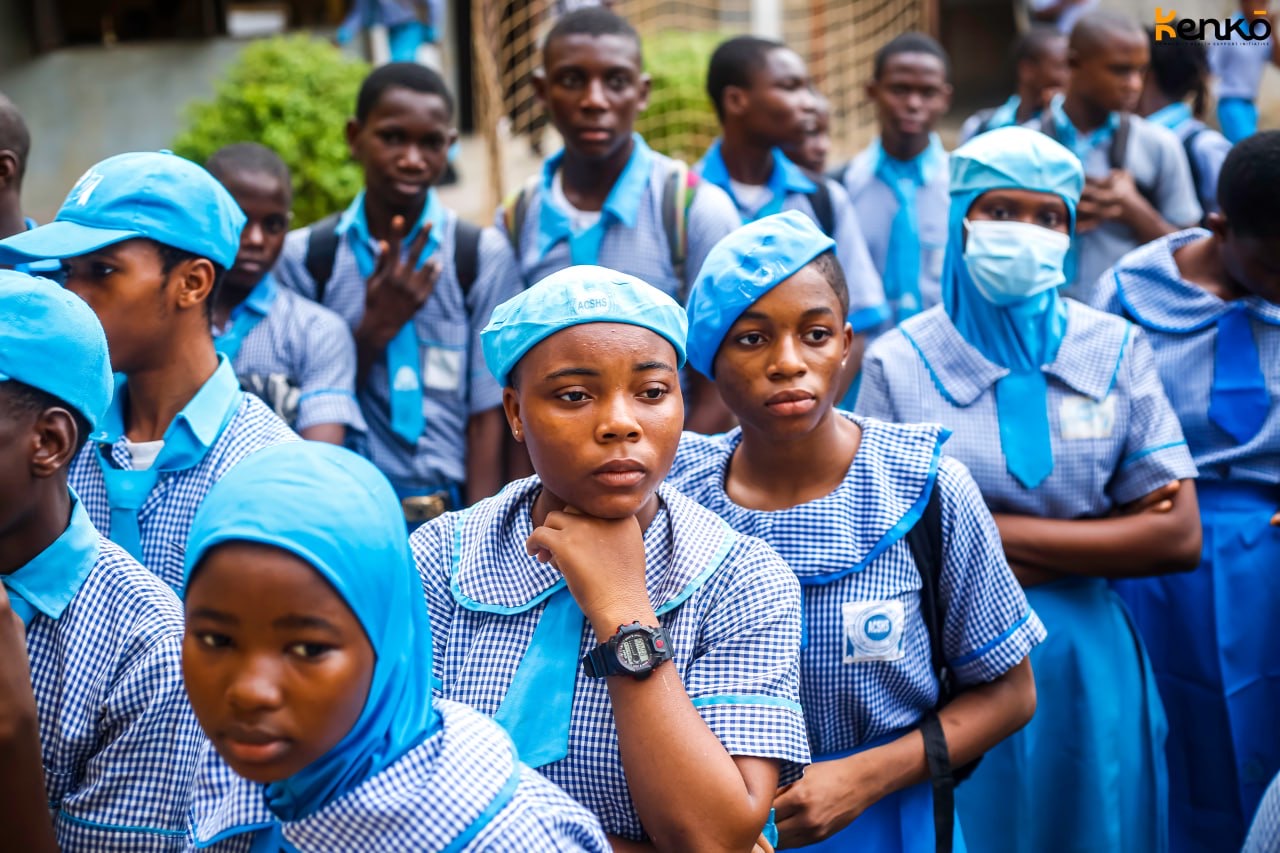
The Kenko School Health Club, run by Kenko Community Health Support Initiative, teaches every student in JSS1, JSS2, SS1 and SS2 the practical skills to save a life, one skill per term, and checks every student's skills.

3 Terms

4 Years Group

1 Hour per Class, per Term
Each term teaches every student one practical skill, so that by the end of the year they can recognise an emergency, act safely, and get someone to care.
Term 1
Recognise and Respond
Students learn to spot an emergency, keep themselves safe, and call for help, before anything else.
First term · Starting November 2026
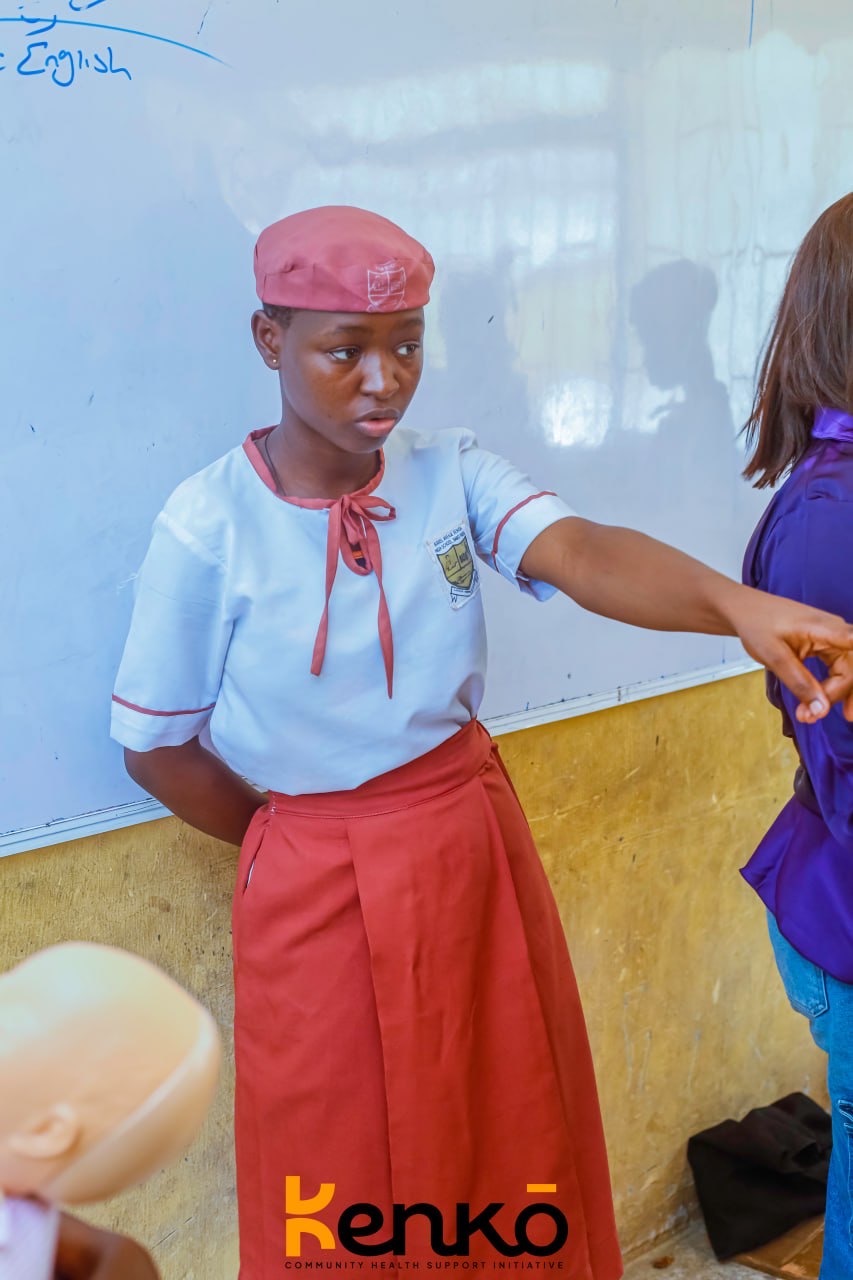
Term 1 Journey
Spot the Emergency
Students learn to check that it is safe, check for a response and breathing, shout for help, and call 112 or 767.
Recovery Position and Seizures
Students practise placing someone in the recovery position, and learn how to help someone having a seizure: time it, cushion the head, and never put anything in the mouth.
Fire Safety
Students learn to raise the alarm, get out and stay out, keep low under smoke, and stop, drop and roll.
Term 2
Save a Life: CPR
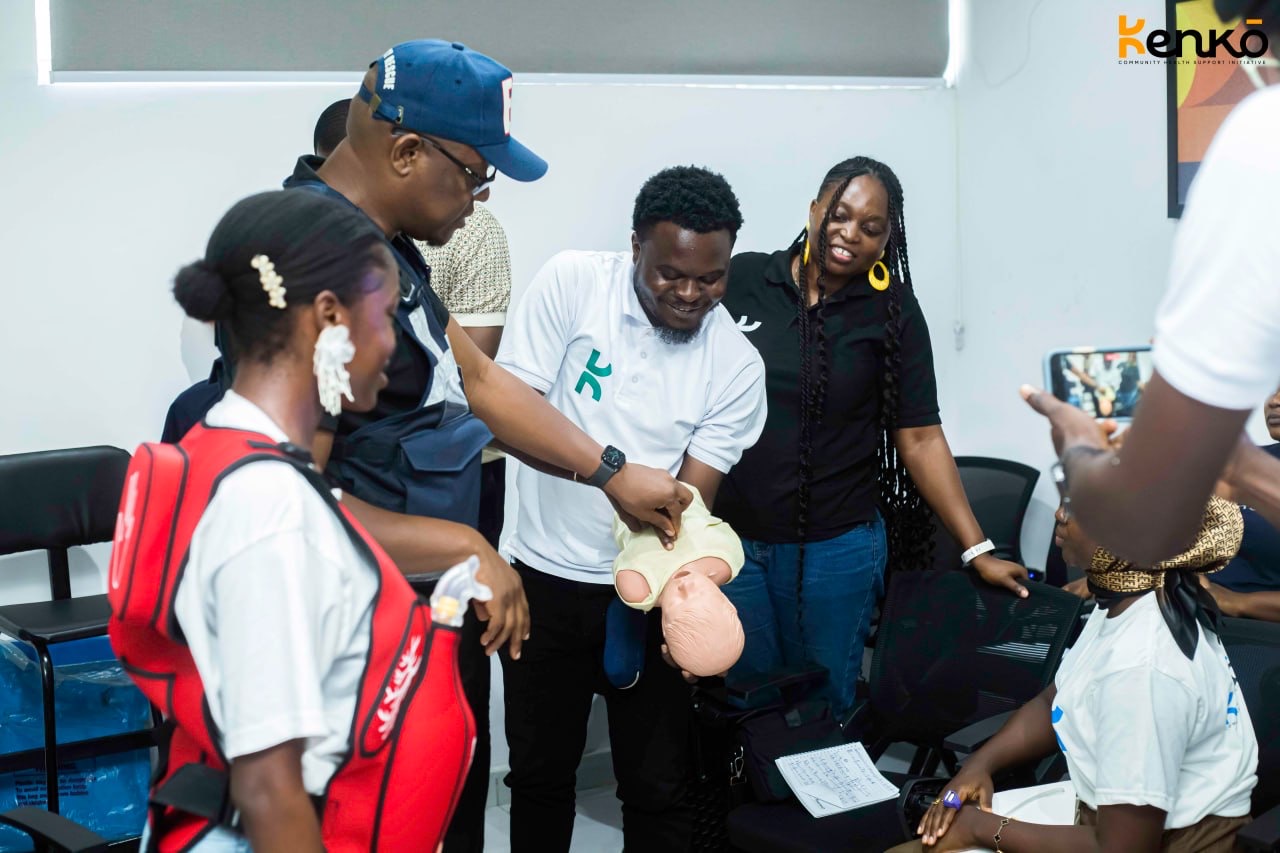
Every student learns hands-only CPR on a manikin and keeps going until help arrives.
Second term
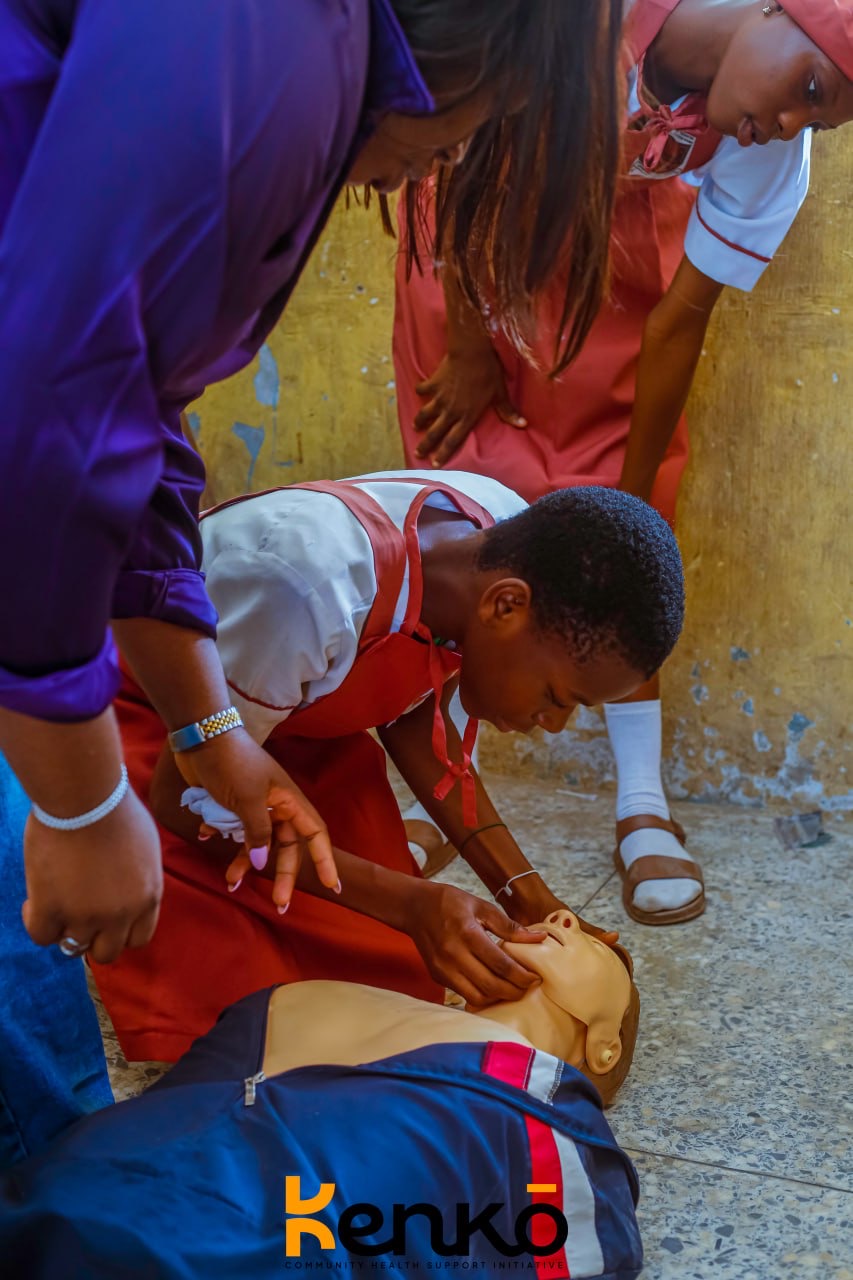
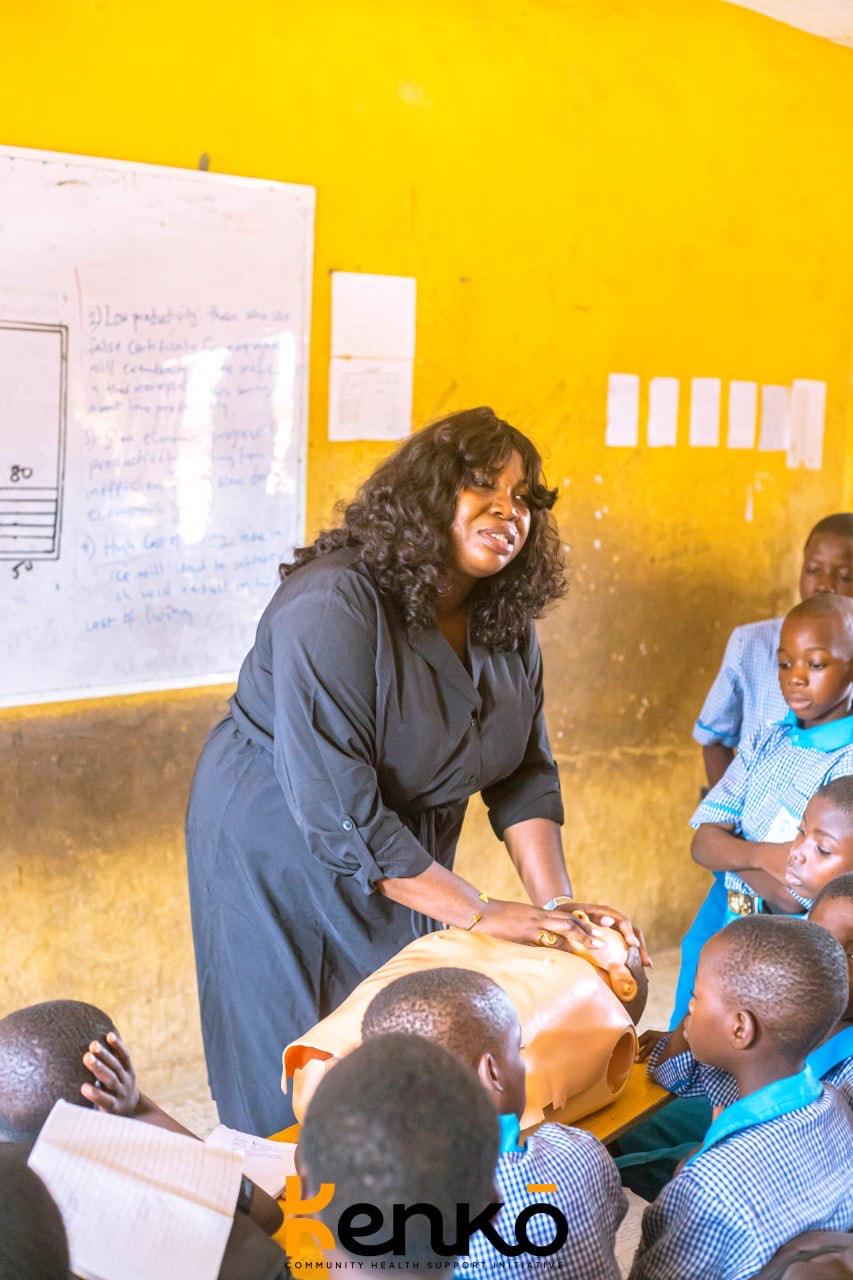
Hands-On Practice
Students practise in small groups on manikins, pushing hard and fast at 100 to 120 compressions a minute, then each student is checked against a written checklist.
Topics Include

Check response and breathing

Call 112 or 767

Hands-only CPR
01
Practise on Manikins
02
Observed Skills Check
03
Inter-School Competition
Term 3
First Aid
Students learn the first aid that matters most at school and at home.
Third term
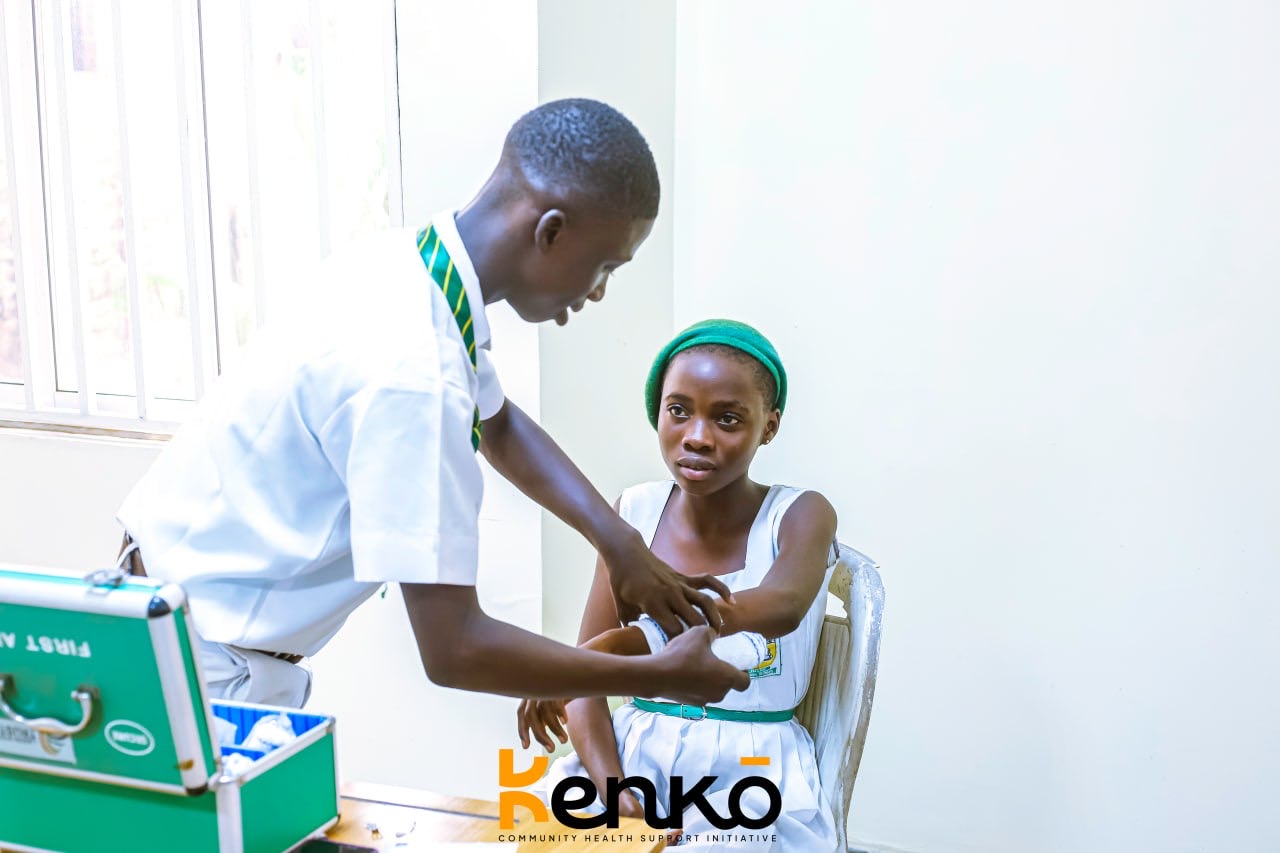
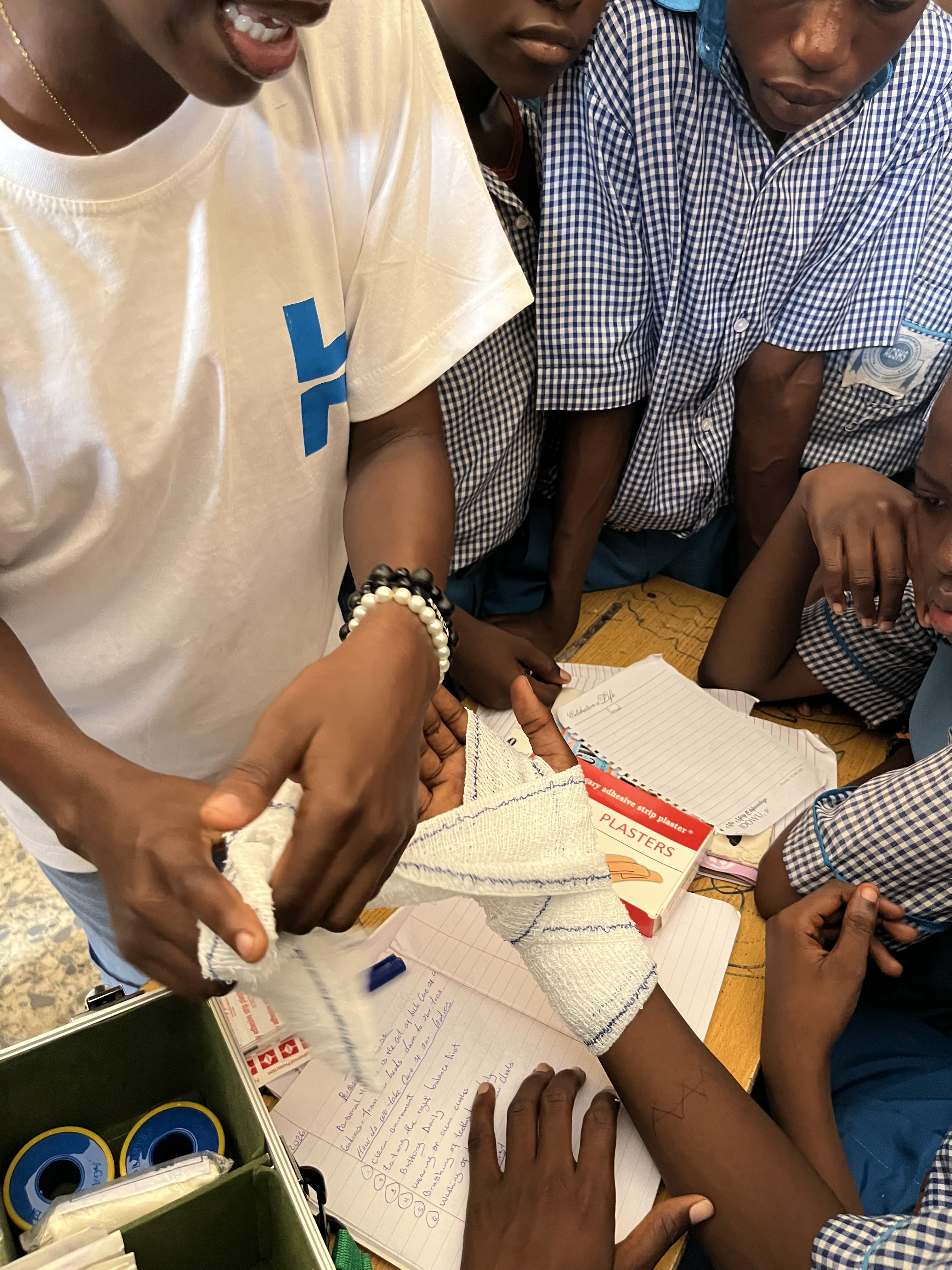
Stop Bleeding and Bandage
Students learn to press firmly on a wound to stop bleeding, and apply a bandage.
02
Cool a Burn
03
Help Someone Who Is Choking
04
Competition and Awards
And when a student needs more than a club can give.
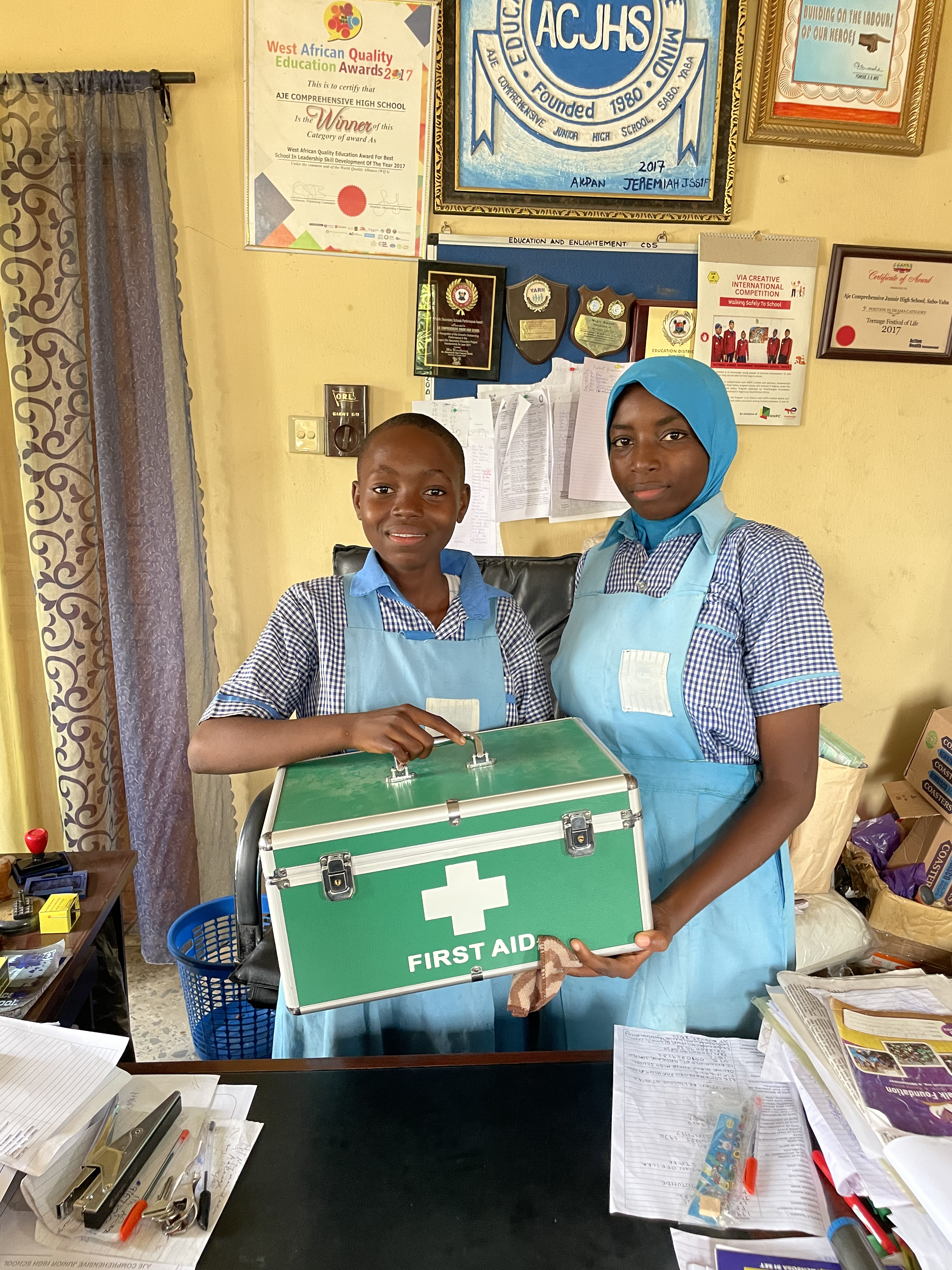
Every Kenko School Health Club is attached to a Youth Health Corner — a confidential space where a student can raise a health concern. Where they need care, we refer them to a named health facility and follow up to confirm they got there. Menstrual health, mental wellbeing and hygiene are covered through our Youth Health Corner, and our year- round support to schools continues, including first aid box restocking and our pad bank for girls.
Curriculum
Three skills that save lives
Schools already teach the theory of health. We teach the practice: one life-saving skill each term, taught by trained trainers alongside the school's own teachers.
K
Recognise and Respond
Spotting an emergency, calling 112 or 767, the recovery position, seizures and fire safety.
Recovery Position
Seizures and Fire
CPR
Hands-only CPR on a manikin, until help arrives.
First Aid
Stopping bleeding, bandaging, cooling a burn, and helping someone who is choking.
K
Every Student Checked
Each student shows the skill and is marked against a written checklist, so our results can be checked student by student.
Respond with Confidence
Promote a Safer Community
Programme Impact
The School Health Club Programme goes beyond awareness. It equips students with practical knowledge, leadership skills, and the confidence to influence positive health behaviours within their schools and communities.
1,500+
Students Trained
780
Can Perform CPR and First Aid
39
Referrals Completed to Care
Kenko School Health Club Pilot
November–December 2026
Recognise and Respond
One-hour sessions for every class in a year group: spotting an emergency, calling 112 or 767, the recovery position, helping someone having a seizure, and fire safety.
Frequently Asked Questions
Quick answers to the most common questions
You can also train to teach life-saving skills in schools and communities.
No. While healthcare professionals strengthen our clinical activities, most of our work — health education, school engagement, campaigns, logistics, and communications — is open to everyone. We provide orientation and guidance for every role.
ontact us by WhatsApp or email with your school's name and location. We will meet your principal, explain the programme and agree a timetable. The school gives one hour per class, per term, for JSS1, JSS2, SS1 and SS2, and a teacher at each session. We bring trained trainers, manikins and materials, at no cost to the school, and train your teachers in a one-day course.
Donations fund programme delivery: manikins and first aid training kits, printed materials, sanitary kits for our pad bank, outreach logistics, and reasonable expenses for our volunteers. We publish our results every term so supporters can see what their contribution achieves.
Distance is no barrier. Diaspora supporters contribute through donations, professional expertise, remote volunteering in content and communications, and connecting us with partners and funders. Contact us and we'll find the right fit.
Health insights and community stories delivered to your inbox.
Subscribe to receive health tips, outreach updates, volunteer opportunities, event announcements, and inspiring stories from the communities we serve